
Your Window Shutters After-Care Guide.
With a small amount of gentle, routine care, your shutters will maintain their crisp finish and smooth operation for decades.
How do I clean my window Shutters?
Golden Rule: Avoid Chemicals and Harsh Cleaners
Even mild household sprays-such as glass cleaner, multi-surface sprays, bleach, furniture polish, or methylated spirits-can strip, dull, or discolour the protective lacquer and paint finish over time. Additionally, silicone-based polishes leave a residue that attracts more dust and makes future touch-ups difficult.
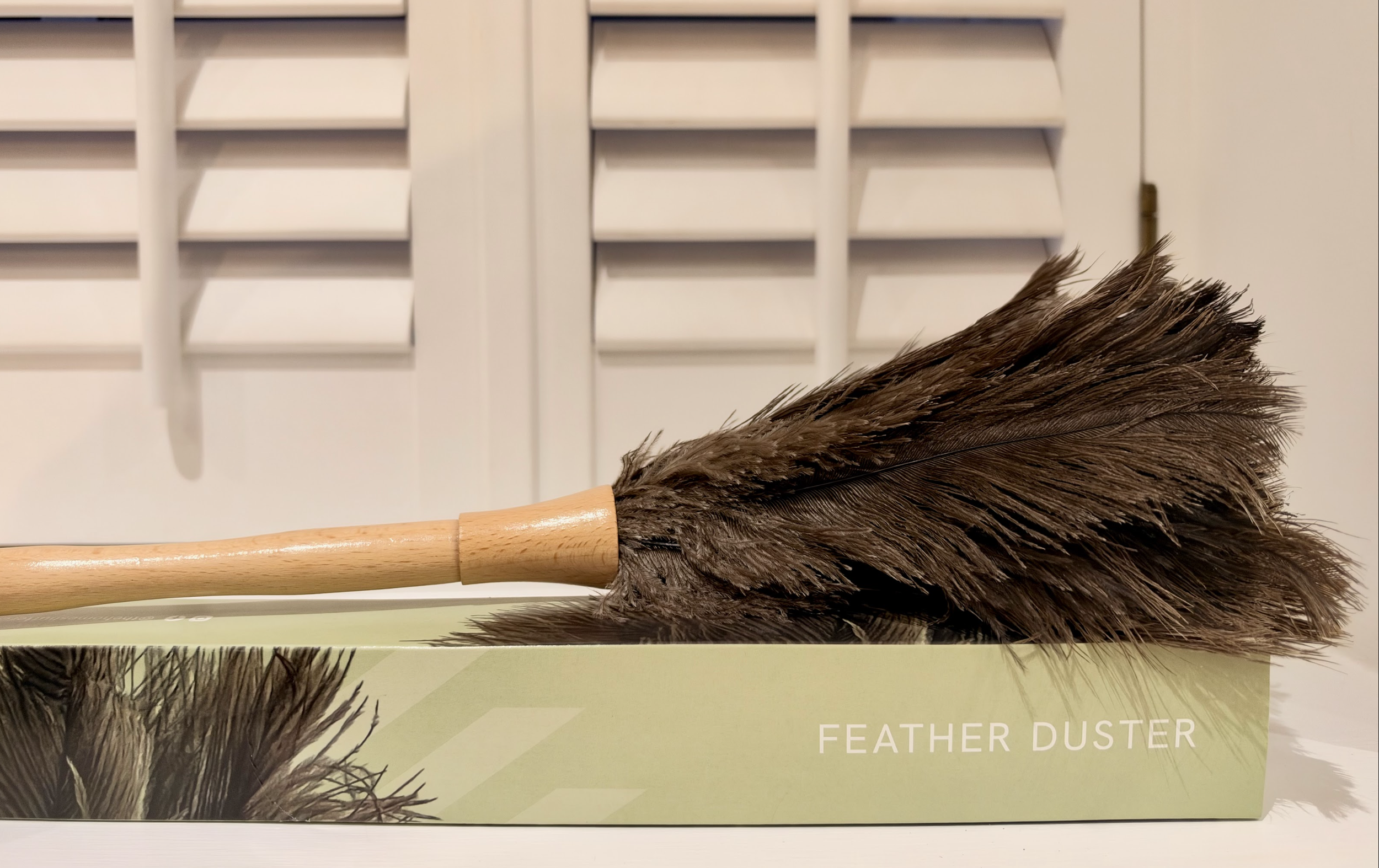
Luckily, The Home Shutter Company provide your with a feather duster with each order! This ensures you are ready from day one to keep your shutters tip-top!
Dealing with marks and spills (as needed).
Golden Rule: As before, avoid chemical cleaners!
If fingerprints, smudges, or splashes occur, treat them gently:
Dampen a Soft Cloth (or use a chemical free baby wipe): Lightly dampen a clean lint-free or microfibre cloth with plain lukewarm water only. Wring it out thoroughly so it is barely damp, never wet.
Wipe Gently: Lightly wipe the marked area without scrubbing.
Dry Immediately: Follow immediately with a separate dry, soft cloth. Never leave standing moisture on real wood, as excess water can cause the timber to swell or the paint to blister.
Routine Dusting (Weekly/Monthly).
Keeping dust from settling into the hinges and louvre joints prevents buildup and keeps the mechanism moving smoothly.
Feather Duster or Soft Brush: Using the duster we provided or a soft-bristled paintbrush works well for reaching into corners, around hinges, and along tilt rods.
Microfibre Cloth: Gently wipe down the frame, stiles, and individual louvres using a clean, dry microfibre cloth.
Vacuum Brush Attachment: You can use a vacuum cleaner on a low suction setting, provided you use a clean, soft-bristled upholstery brush attachment so you do not scratch the paint.
Operating your shutters properly.
Tilting the Louvres: Always open and close the louvres using the tilt rod (or by gently rotating one central louvre if you have hidden/concealed tilt). Avoid forcing stiff louvres and please remember, the shutters only shut fully, pointed upwards - Forcing them closed down, will damage the louvre.
Opening the Panels: Open shutter panels smoothly using the stiles (the vertical side frames) rather than pulling on the louvres, which are not designed to bear the weight of the panel.
Close Louvres Before Folding: Before folding bi-fold panels back against the wall, always tilt the louvres into the closed (vertical) position so they do not catch or clash against the frame or adjacent panels.
Environmental Care & Hardware.
Manage Condensation: In rooms prone to moisture (such as kitchens, bathrooms, or older single-glazed windows), wipe away window condensation regularly and ensure good ventilation. Prolonged exposure to damp air can cause real wood to warp and paint to crack.
Avoid Direct Heat: Keep shutters clear of direct, intense heat sources like portable heaters, which can dry out the timber and cause hairline cracks in paint joints. Please note, our warranty fully covers heat delivered by the sun!
Tension Screws: Over time, daily movement may slightly loosen the tension screws on the sides of the panels (which hold the louvres at your chosen angle). If louvres begin to droop, gently tighten the tension screw located inside the side stile (inside screw cap) using a standard screwdriver-a quarter-turn is usually enough.